If you own a single-family home in Los Angeles, your backyard might be the most underutilized real estate you'll ever own. A 1,200 square foot lawn, in 2026 LA, can become a 600-square-foot accessory dwelling unit that rents for $2,800 a month. Or houses your aging mother. Or finally gets your office out of the spare bedroom. Or all three, in sequence, over the next 30 years.
This is why we're getting more ADU calls than any other type of project right now. The math is too compelling for too many homeowners to ignore. Below: how California's ADU laws work in 2026, what an ADU actually costs, what kind of rent you can expect, and what to look for in your own backyard.
What Is an ADU, Exactly?
An Accessory Dwelling Unit is a separate, fully self-contained living space on the same lot as a primary residence. It must have:
- A separate entrance
- A kitchen (or at least a kitchenette in the case of a "JADU", junior ADU)
- A bathroom
- A sleeping area
- An address or unit designation
There are three flavors:
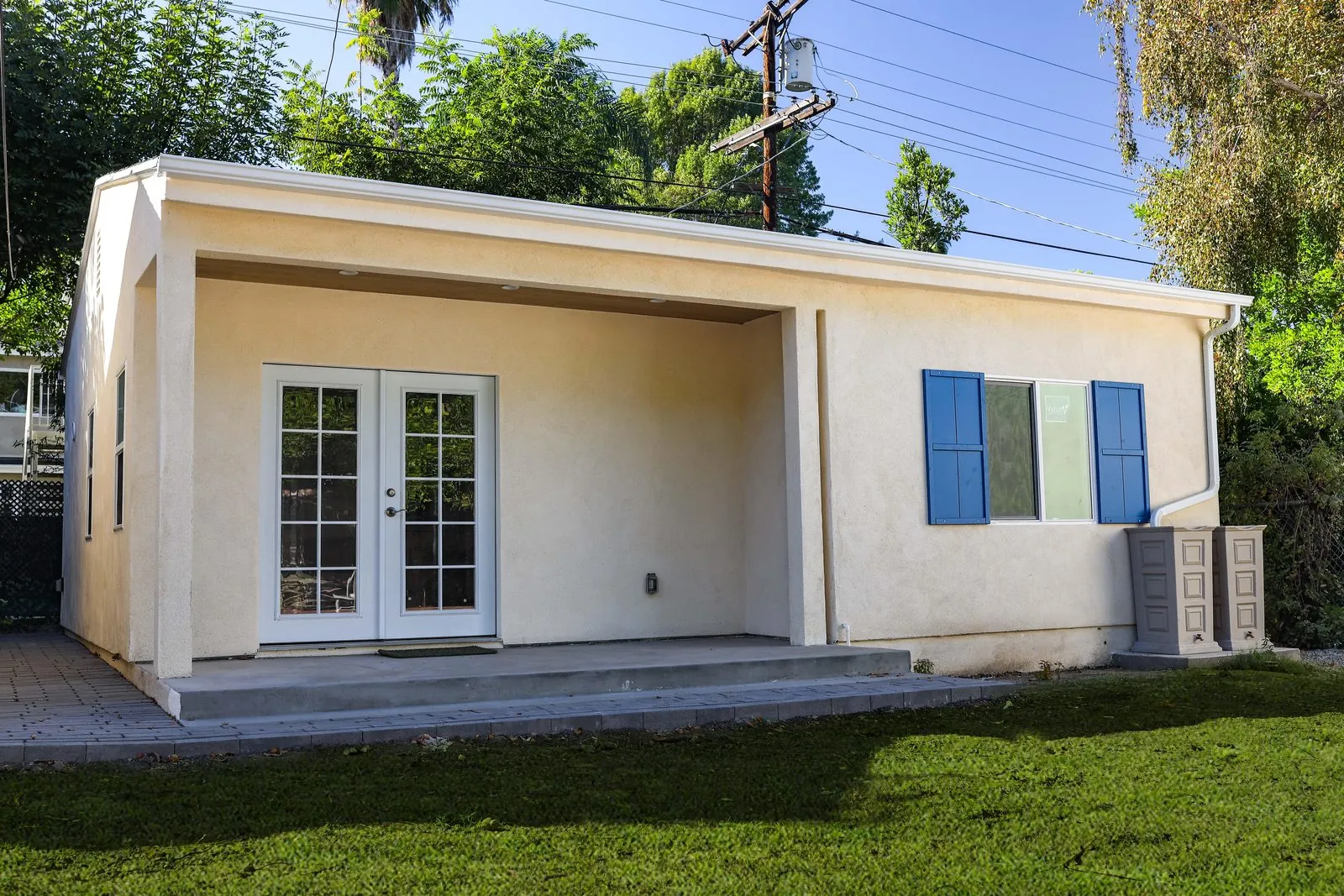
- Detached ADU, a freestanding building in the backyard. Most flexible, most expensive, highest rental potential.
- Attached ADU, built onto the side or back of the existing home, sharing a wall. Less flexibility but cheaper than detached.
- Garage conversion ADU, an existing garage converted into living space. Cheapest, fastest, often the right answer.
California Has Dramatically Streamlined ADU Approvals
This is the part that's changed everything. Over the last 6 years, California has passed a sequence of laws (SB-9, SB-10, AB-2221, AB-1033, and others) that have stripped most of the friction out of ADU approval.
What this means in practice for most LA homeowners in 2026:
- Most ADUs are approved ministerially, meaning if you meet code, the city approves it. No design review board, no neighborhood meetings, no discretion.
- Setback requirements have been reduced (4 feet from rear/side property lines for most ADUs)
- Off-street parking requirements have been mostly eliminated for ADUs near transit
- Owner-occupancy requirements have been suspended through at least 2030
- You can have both an ADU and a JADU on most lots
This is a remarkable amount of policy momentum. The state has clearly decided ADUs are part of the housing solution, and they've made it easier than at any point in the last 50 years to build one.
What Does an ADU Cost in 2026?
Here's the question we get asked most. Real numbers, based on projects we're currently building in LA:
Garage Conversion ADU
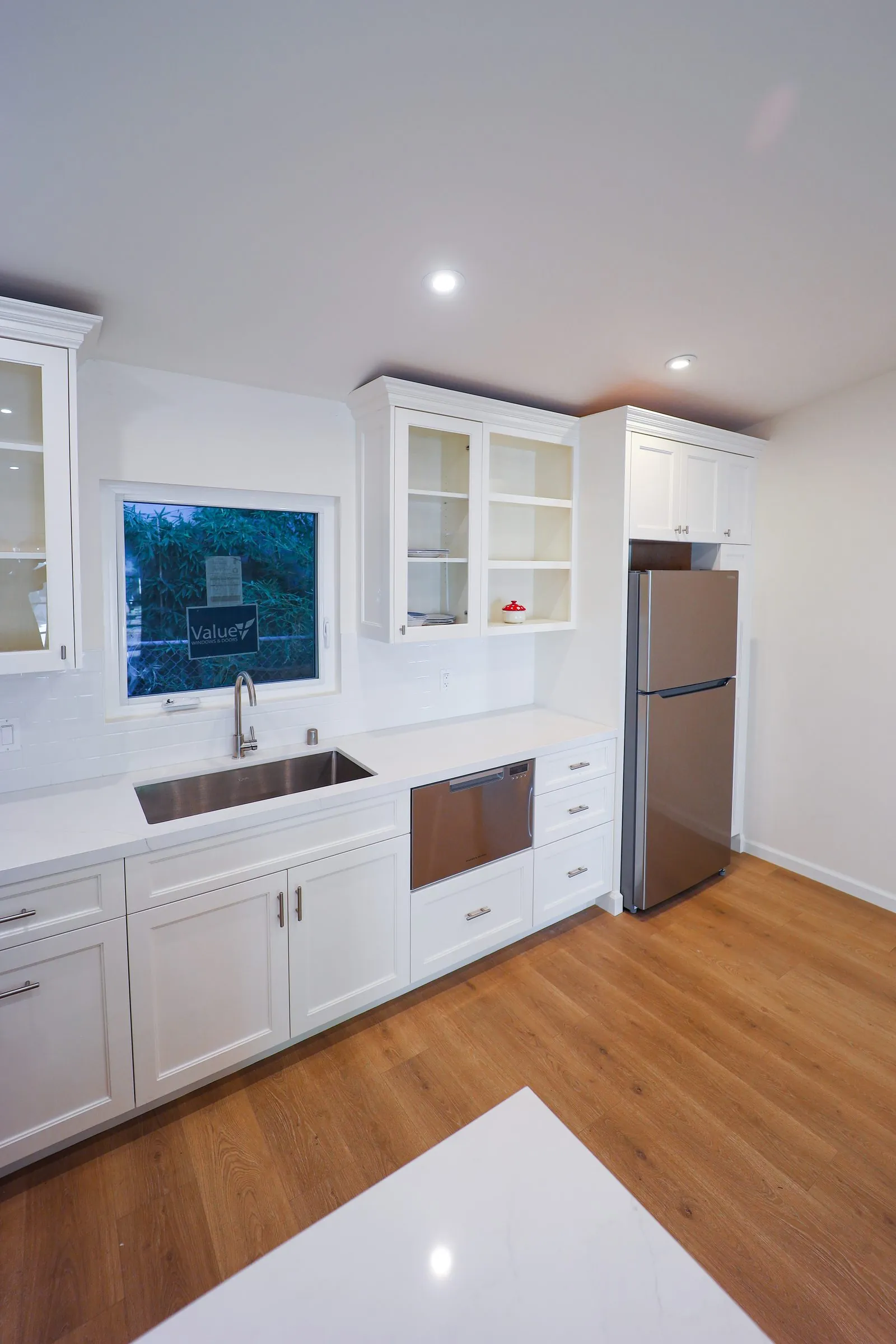
A standard 400-450 sq ft garage converted into a code-compliant studio or 1-bedroom: $100,000 - $180,000
What drives the variance: how much plumbing/sewer work is needed (sometimes a long run to the existing main), whether the garage roof and slab are sound, finish quality (basic IKEA kitchen vs. custom), and any electrical panel upgrades.
Attached ADU (New Construction)
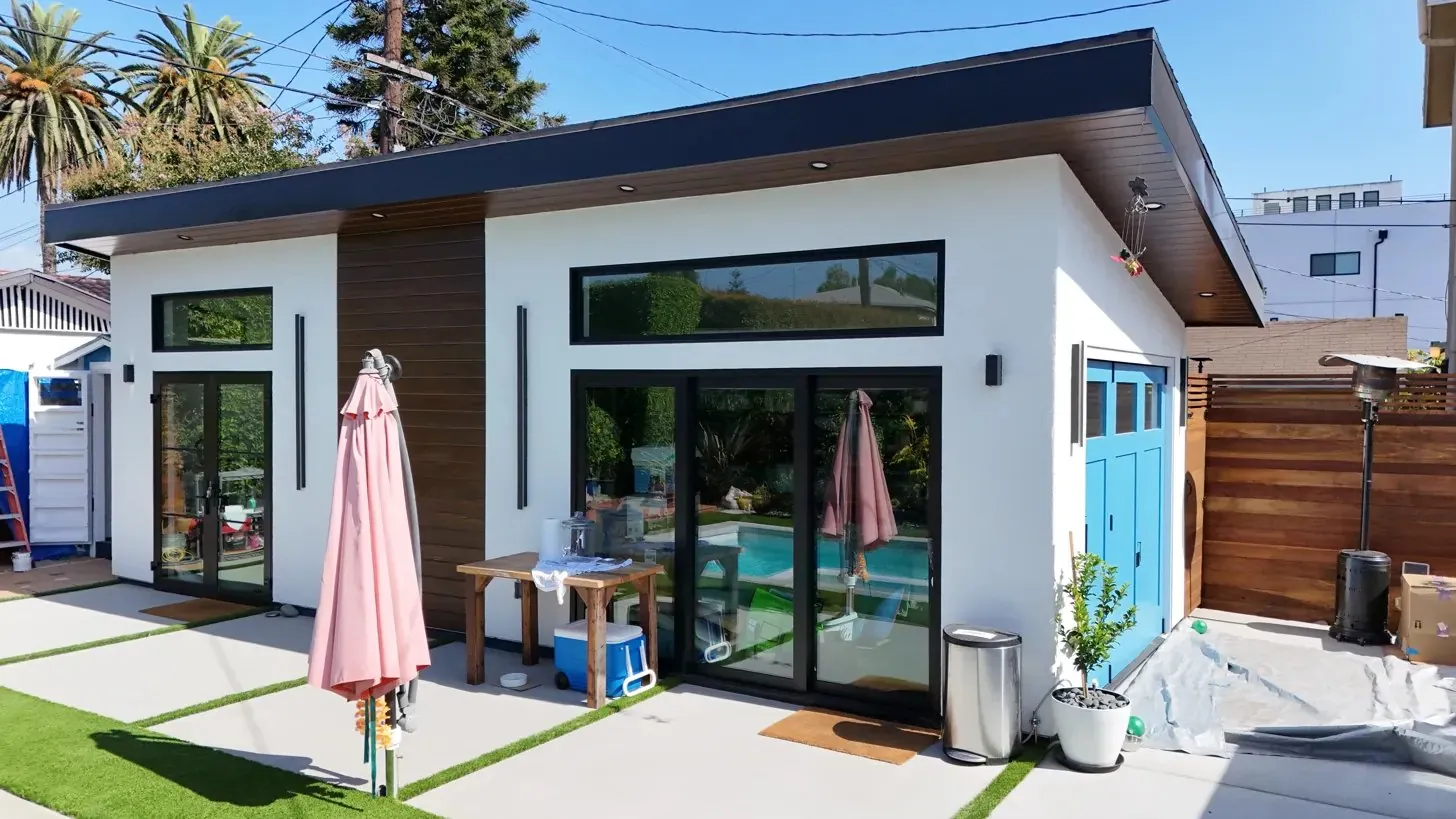
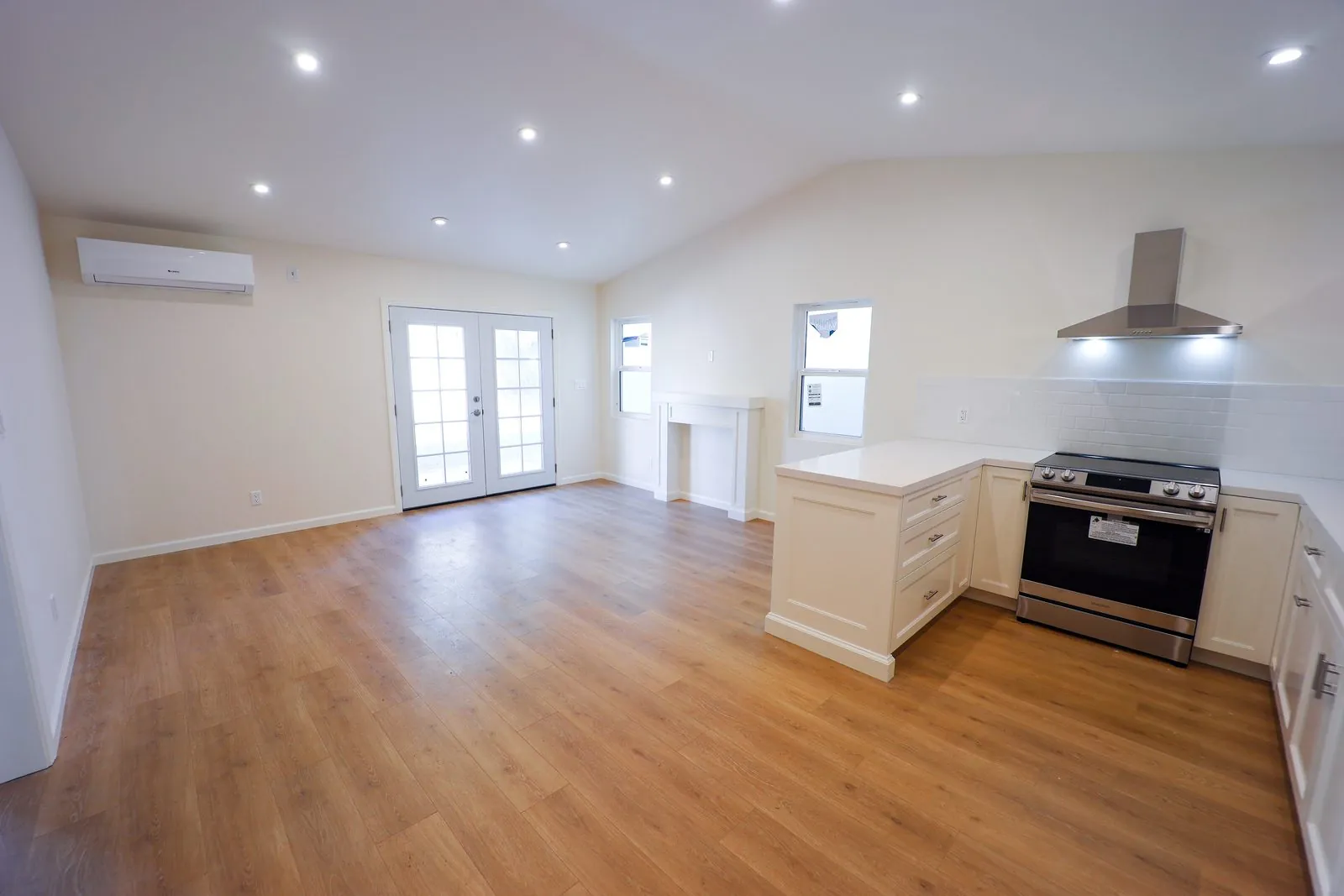
A 500-800 sq ft ADU built as an addition to the existing home: $200,000 - $350,000
Detached ADU (New Construction)
A standalone 600-1,200 sq ft ADU in the backyard: $250,000 - $450,000+
Larger, custom-finished ADUs (1,000+ sq ft, high-end finishes) can run $500K-$700K. Pre-fab/modular ADUs can save 10-20% but have their own complications and aren't always cheaper than they appear.
What Kind of Rent Can You Actually Expect?
This is the second question we get asked most. Real LA rental data for ADUs in 2026:
- Studio ADU (350-450 sq ft): $1,800 - $2,400/month
- 1-bedroom ADU (450-700 sq ft): $2,200 - $3,200/month
- 2-bedroom ADU (700-1,000 sq ft): $2,800 - $4,200/month
- Larger / luxury ADU (1,000+ sq ft): $3,500 - $5,500+/month
These numbers vary significantly by neighborhood. An ADU in Bel Air or Brentwood will rent for the top of the range or above. An ADU in a more modest area might be at the bottom. The single biggest rent driver: the desirability of the host neighborhood.
Doing the Actual Math
Let's run a realistic scenario. Say you build a $250,000 detached 1-bedroom ADU. You finance $200K of it with a HELOC at 7.5% interest, 20-year term. Monthly payment: roughly $1,612.
You rent it for $2,800/month (typical for a nice 1-BR ADU in a desirable LA area).
Net cash flow: $1,188/month covering your loan, plus the property pays itself down. Over 20 years, you've added a fully owned, rentable unit worth $400-600K to your property without spending a single additional dollar of net income.
And, once the loan is paid off, that's $2,800+/month of pure rental income, indefinitely. This is why the math works.
Rental Income Is Only Half of It
About half of the ADUs we build aren't intended for rental at all. The use cases:
- Aging parents, by far the most common non-rental use. Keeps family close while preserving privacy and independence.
- Adult children, kids in their 20s saving for a down payment. The ADU becomes a launching pad.
- Home office / studio, for people who work from home and want real separation.
- Guest house, for families who entertain regularly.
- Future flexibility, built now while it's affordable, used differently as life changes.
This last one is the smartest reason. An ADU built today might house your kid in 2027, your mother-in-law in 2032, a renter in 2038, and your retirement income in 2045. The same building, four different lives.
What to Look for in Your Own Lot
Most LA single-family lots can support an ADU. The questions we ask first:
- How much usable backyard is there? (Detached ADUs typically need a 12×20 footprint minimum, plus access path)
- Where is the existing sewer line? (Long sewer runs add cost)
- What's the existing electrical service? (200-amp panel is ideal; 100-amp may need upgrade)
- Are you in a hillside zone, coastal zone, or HOA? (These add complexity)
- Is your garage in good shape? (If so, conversion is often the smartest path)
Timeline: Realistic Expectations
From the day you call us to keys-in-hand:
- Garage conversion: 6-9 months total (design + permits + build)
- Attached ADU: 9-12 months
- Detached ADU: 10-14 months
The permitting phase, which used to be the unpredictable variable, is now reliably 6-12 weeks for standard ADU plans in most LA jurisdictions. Construction is typically 5-9 months for detached new builds.
Should You Actually Do It?
An ADU isn't right for every lot or every owner. We turn away ~15% of the ADU consultations we do, sometimes the lot doesn't work, sometimes the financial picture doesn't work, sometimes the homeowner's tolerance for a 10-month construction project doesn't work.
But for the homeowners where it does work, an ADU is one of the highest-ROI investments you can make on real estate you already own. And in 2026 California, it's never been easier or more straightforward to build one.