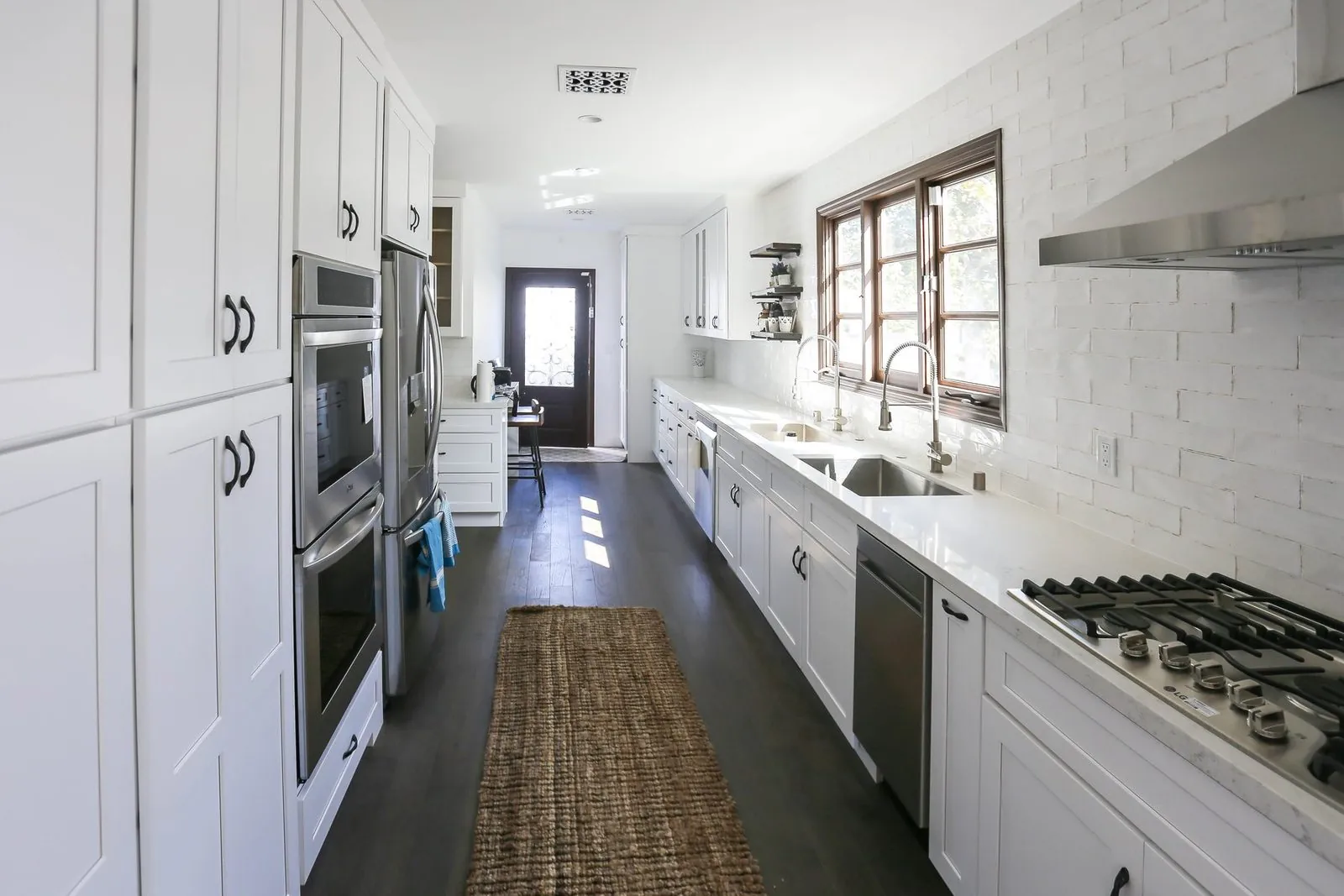
If you've been looking at kitchens lately, whether you're remodeling, just browsing, or stuck deep in a Pinterest hole, you've probably noticed something. The cold, all-white, hard-edged kitchens that dominated the 2010s have quietly been replaced. The 2026 kitchen is warmer. Quieter. More confident.
It's also more thoughtful about how it's actually used. Walk-in pantries hide the toaster and microwave. Arched range hoods sit over real cooking workhorses. Cabinet faces are flat and slab-like, sometimes wood, sometimes paint, almost never the heavily detailed shaker doors of a few years ago.
We've been building kitchens in Los Angeles for over 30 years. Below is what we're seeing requested in 2026, what's working, what's a passing trend, and what details actually make these kitchens feel finished rather than assembled.
Slab Cabinets Are Everywhere, And That's a Good Thing
The single biggest shift is the move away from heavily detailed shaker cabinets toward flat-panel slab doors. Slab doors are exactly what they sound like: a single flat piece of veneer or paint, with no inset panels, no rails or stiles, no decorative profiles.
What you gain:
- A cleaner, calmer visual. The wood grain or paint color becomes the feature, not the door styling
- Easier to clean, no inset corners to trap grease and dust
- A more modern, custom-feel look for less money than ornate millwork
- Better continuity with the rest of the home, especially in modern and transitional architecture
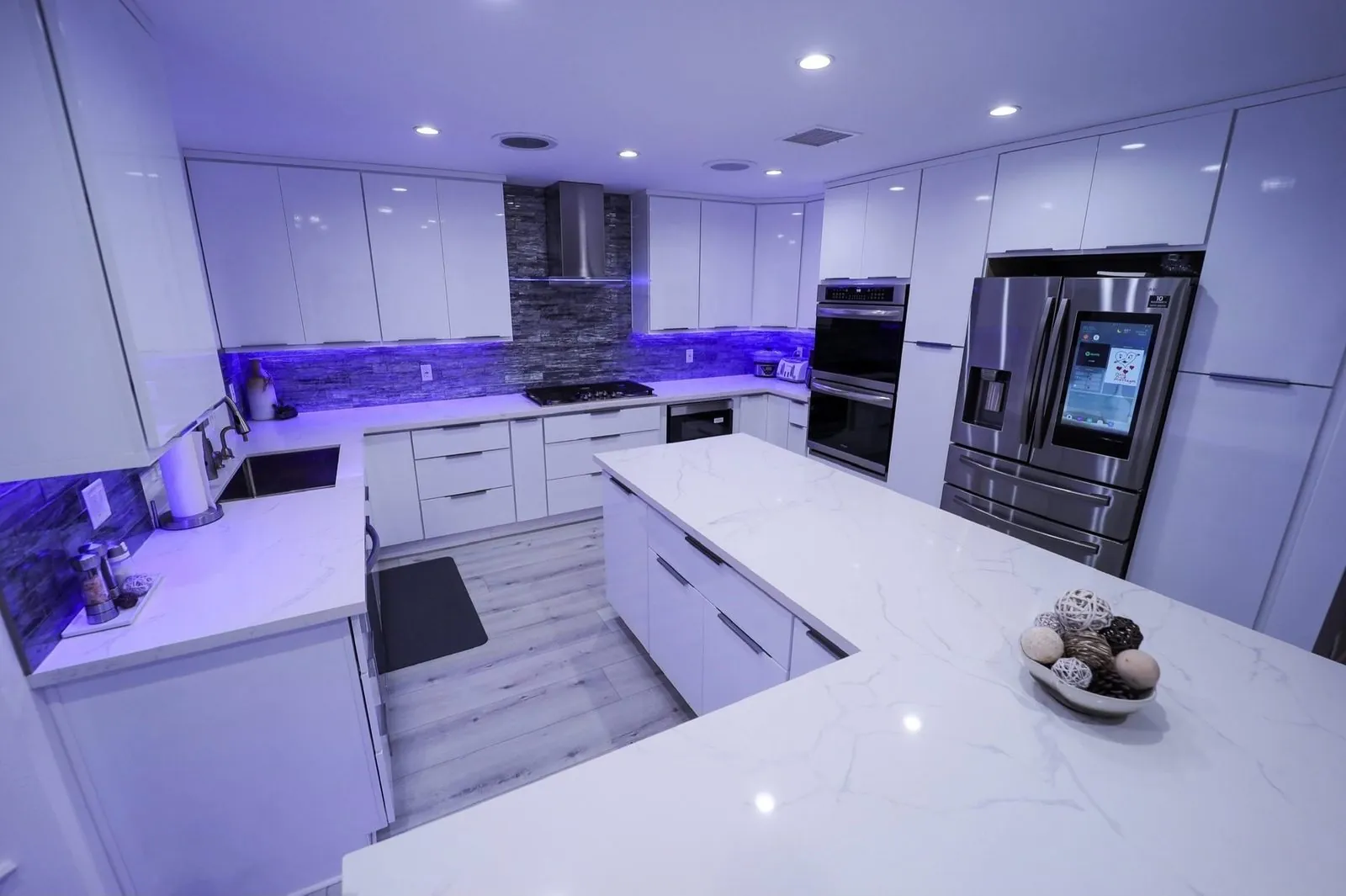
If you want a little more visual texture, we're seeing slab doors with very subtle grain, quartersawn white oak, walnut, rift-cut maple. The grain itself becomes the detail. We've also seen slab doors paired with thin reeded glass for upper cabinets, which adds dimension without adding ornament.
Warm Wood Is Back. So Is Paint That Isn't White.
For about a decade, the safe answer for cabinets was "paint them white." That answer is gone. The 2026 kitchen embraces warm wood and rich, saturated paint colors with confidence.
The Wood Species We're Using Most
- White oak, the workhorse. Quarter-sawn for a tighter, more architectural grain. Holds finish beautifully and takes either a clear matte or a smoked stain.
- Walnut, for islands and feature cabinetry. Deep, chocolatey, expensive-looking even in modest quantities.
- Rift-cut white oak, when you want the warmth of wood but a very subtle, almost-stripeless grain.
- Cerused or limed oak, a beautiful look where the open grain is filled with a contrasting color (white, gray, or pale taupe). Works in transitional and coastal homes.
Paint Colors That Are Showing Up Everywhere
If you don't want wood, paint is having a renaissance. The colors we install most:
- Deep, mossy greens (Farrow and Ball Studio Green, BM Cushing Green)
- Muted sage and olive
- Off-blacks and inky charcoals
- Warm putty and mushroom tones
- Cabinet bottom + island in dark, uppers in white or warm wood (the "two-tone kitchen")
The all-white kitchen isn't dead, but it's no longer the default. It's now one option among many, and it has to be done with intention.
The Hidden Pantry: This Changes Everything
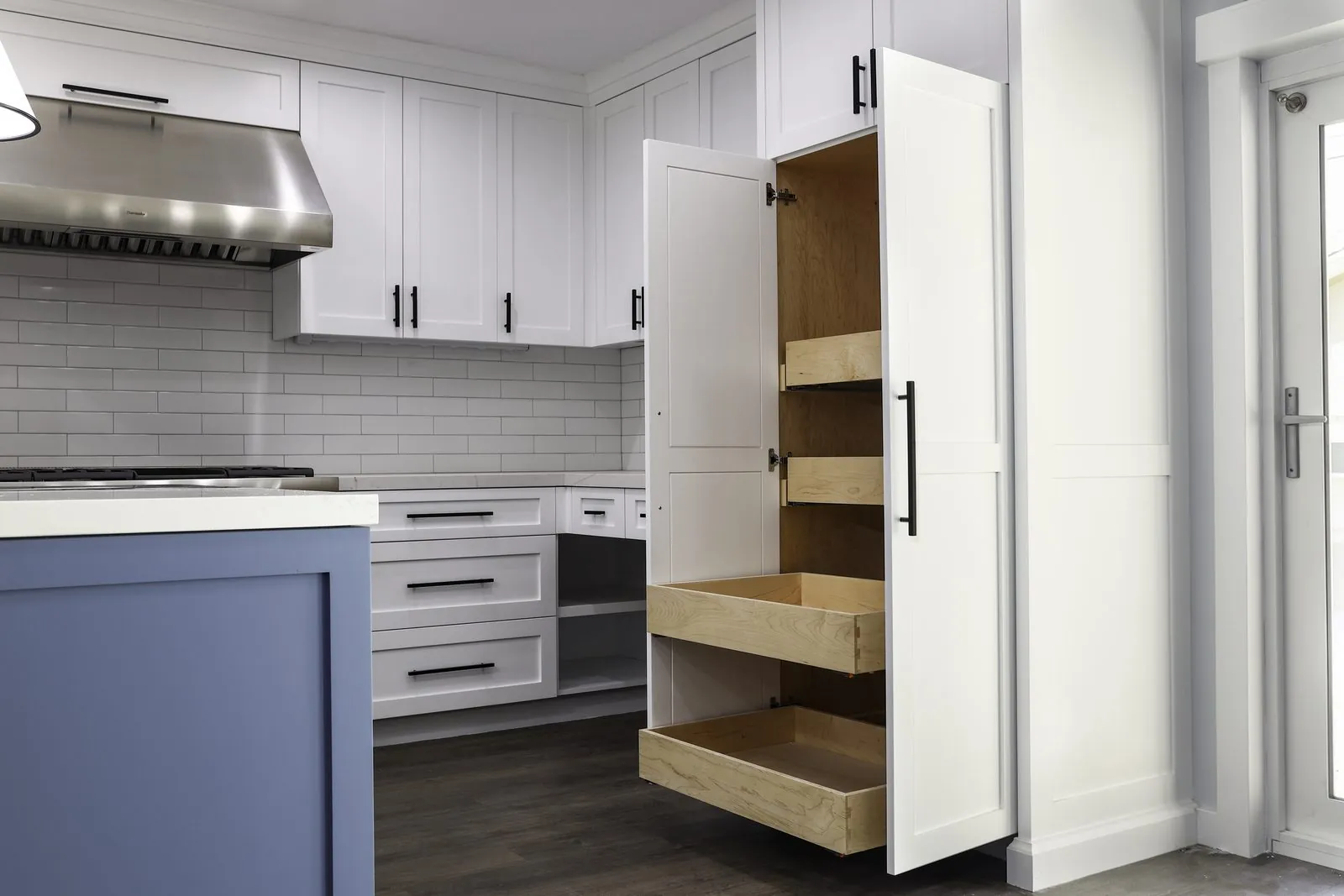
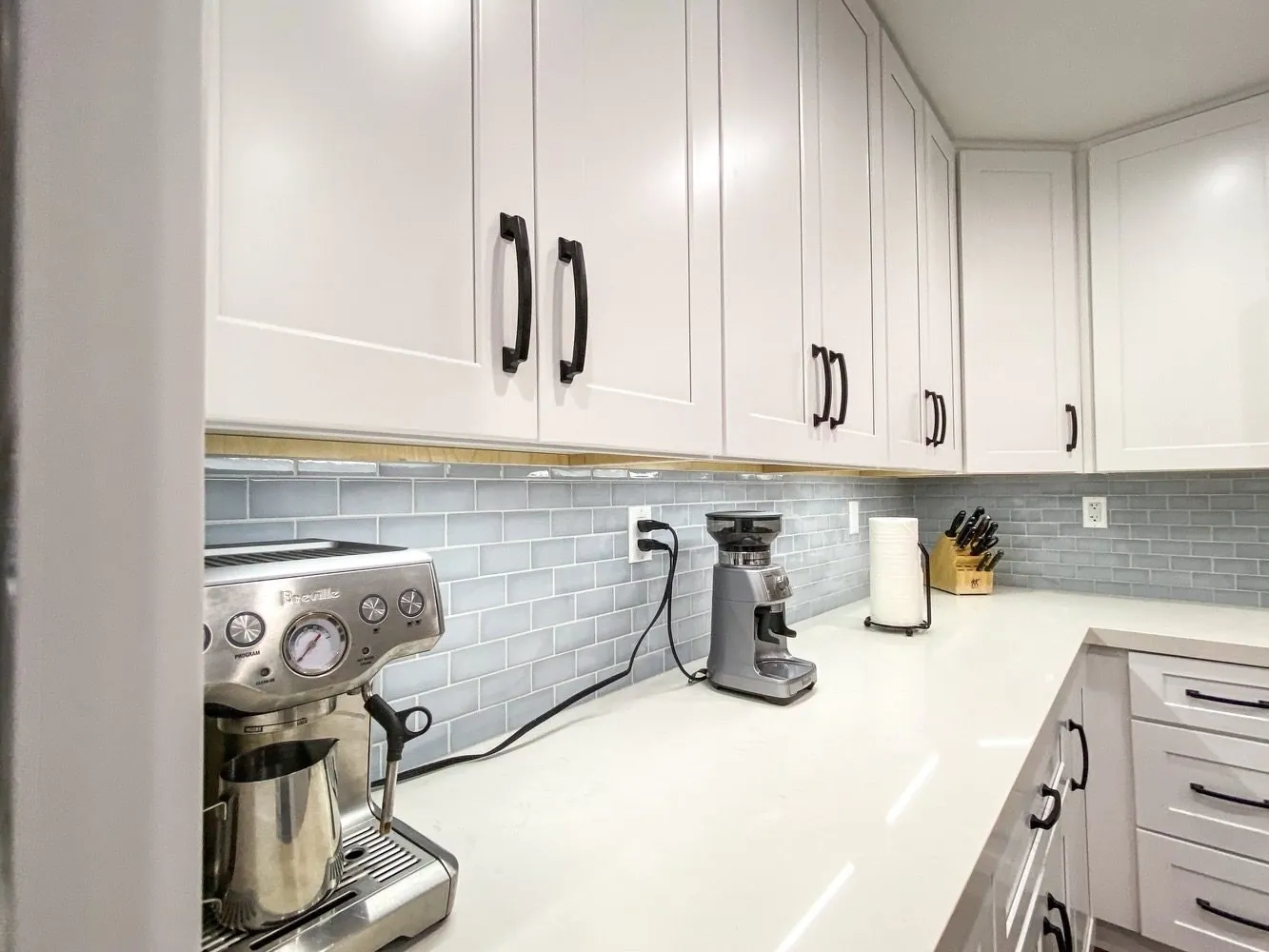
The single most-requested feature in 2026 is what we call the "working pantry" or "back kitchen", a separate, often-walk-in pantry space that hides the everyday kitchen mess. Toasters, microwaves, the coffee station, paper towel rolls, kid snacks, the second sink for prep. It all goes in there.
The main kitchen becomes the showpiece: clean countertops, a beautiful range, a single large piece of art. The working kitchen is where you actually cook.
We've seen this requested in homes as small as 1,800 sq ft. It doesn't have to be massive, even a 4×6 ft alcove with shelving, an outlet for the microwave, and a small counter changes how the kitchen works.
Arched Range Hoods, Plaster, and "Mediterranean Modern"
Maybe the most distinctive 2026 detail in LA is the arched plaster range hood. Instead of a stainless steel hood, or even a wood hood, the entire wall above the range becomes a curved plaster nook, with a hidden hood liner inside.
It feels custom. It feels architectural. And it leans into a very LA aesthetic we're calling "Mediterranean modern", clean lines, natural plasters, warm wood floors, terracotta or limestone accents.
Other Architectural Details We're Seeing
- Open arches between the kitchen and dining room (instead of squared-off doorways)
- Plaster or microcement walls and hoods
- Inset or "flush inset" cabinetry (where the door sits flush with the face frame, like fine furniture)
- Brass and unlacquered hardware that ages naturally
- Fluted or reeded details on islands and toe-kicks
- Plate racks and open shelving, but used sparingly
Countertops: The Great Quartzite Migration
For the last 5+ years, quartz (the engineered stone) was the default countertop. It's still excellent, durable, low-maintenance, predictable. But for 2026, we're seeing more clients ask for natural quartzite: as hard as granite, as beautiful as marble, but more durable than both.
Quartzite slabs from Brazil and Italy are showing up in island waterfalls, dramatic backsplashes, and full kitchens. Yes, it's pricier than quartz. But it's a real stone with real character, and it lasts forever.
For clients on tighter budgets, we're still happy installing quartz. For clients who want a feature, quartzite is having a moment.
Lighting: Layered, Dimmable, Intentional
Good lighting is the cheapest upgrade you can make to your kitchen, and the most overlooked. In 2026, we're installing kitchens with three or four layers of light:
- Ambient: recessed cans or a few large pendants for general light
- Task: under-cabinet LED strips so the counter is well-lit even with the cabinet doors closed
- Accent: a beautiful pendant or two over the island, often in unlacquered brass or hand-blown glass
- Decorative: a sconce on a hood, a picture light over open shelving, a strip light inside a glass cabinet
All of it on dimmers. All of it switched separately. The same kitchen should feel different at 8 AM, at dinner, and at midnight, and good lighting is what makes that possible.
What's Not on the Trend List (and Why)
A few things you'll see less of in well-built 2026 kitchens:
- Heavy granite with lots of veining
- Cherry wood or red-toned cabinetry
- Tuscan-style decorative detailing
- Tile-on-tile mosaic backsplashes with multiple materials
- Subway tile in a pristine running bond pattern (it's still fine, just not the default anymore)
- Cold all-grey palettes (the 2018 grey is officially over)
None of these are wrong if they fit your home. But they're no longer the safe default, warm, intentional, slightly imperfect is.
So Where Should You Start?
The biggest mistake we see is people jumping straight to materials, "I want walnut cabinets and quartzite counters", before they've thought through layout. Layout is what makes or breaks a kitchen. Beautiful materials in a bad layout still feel wrong.
So start with how you live: where the trash goes, how dinner gets plated, where the coffee station sits, where the kids do homework. Once that's right, materials become easy.